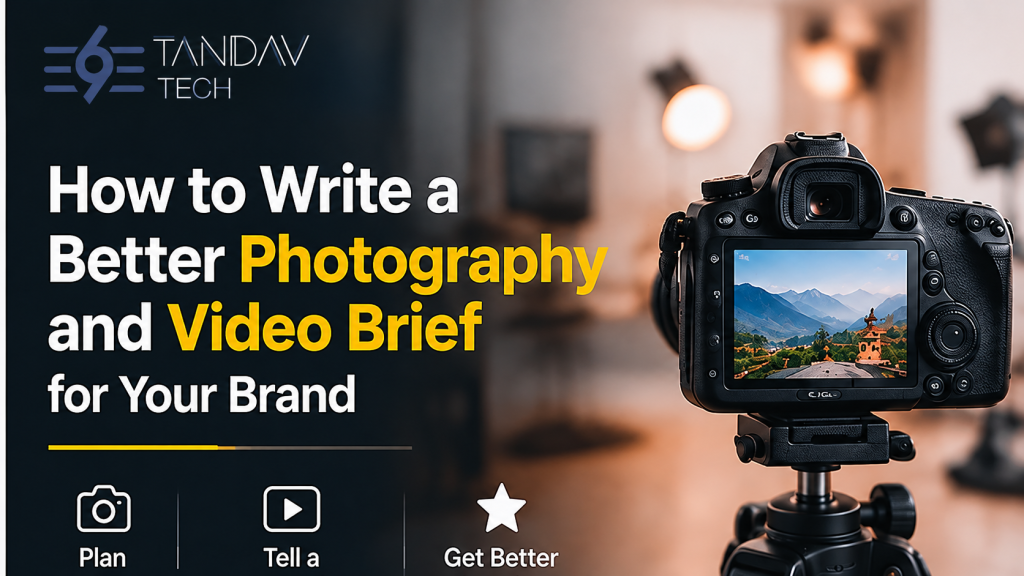
A strong creative project starts before the camera is switched on. The clearest photography and video briefs explain the audience, purpose, message, and practical constraints. That gives your creative team room to make good decisions—and reduces the risk of producing beautiful footage that does not serve the business.
Whether you need a brand introduction, product photographs, event coverage, or short social videos, use this guide to prepare a brief that a photographer or production team can actually work from.
Describe the job of the content
Begin with the problem, not the equipment. Is your audience unfamiliar with the product? Do customers need to see how a service works? Do you need photographs for a new website? Is the video meant to announce an event or build brand recognition?
Choose one primary purpose and define what viewers should understand after watching. “Make a viral reel” is not a useful brief, because virality cannot be promised. “Show how our product is prepared and explain how to order it” is much more actionable.
Identify the audience and the main message
A film for prospective customers may need a different tone from one for business partners. Describe the audience in plain language: what they already know, what worries them, and what they should remember.
Then write a one-sentence message. For example, “Our workshop makes custom furniture and invites customers to discuss designs before production.” A focused message makes it easier to choose scenes, interview questions, and a call to action.
List where the content will appear
The output format matters before production begins. A website banner, a vertical reel, a square product post, and a presentation slide have different framing and editing needs.
Ask for the actual deliverables you will use:
- Landscape and vertical edits where needed.
- A planned approximate length for each video.
- Image dimensions or export sizes for web and social use.
- Subtitle or caption requirements.
- Agreed formats for final files and any thumbnails.
If you need text overlays, allow space in the framing so important faces or products are not covered by interface elements.
Share the brand rules—and useful references
Provide your logo, fonts, colors, preferred terminology, and anything the content must avoid. References are helpful when you explain why you like them: lighting, pacing, camera movement, or mood.
Avoid asking the team to copy another brand’s campaign. A reference should guide the creative direction, not replace an original concept.
Make the shoot realistic
The logistics section should include:
- The proposed location and whether permission is available.
- The people, products, or spaces that need to appear.
- A contact person who can make decisions on the day.
- Dates, access limitations, and relevant safety considerations.
- Any consent, child safeguarding, or confidentiality requirements.
- The review process, who approves revisions, and the final delivery deadline.
For product photography, prepare the products in good condition and identify variations that must be shown. For interviews, agree on key topics in advance. For event coverage, choose priority moments so the team does not miss them while chasing general footage.
Plan for the website, not only social feeds
A short brand video can support an About page, while product photographs can make service pages easier to understand. Discuss whether still frames, alternate crops, thumbnails, or short cutdowns will also be needed.
Keep web performance in mind. Compress image files appropriately, use poster images for embedded video, and avoid autoplay choices that make it harder for visitors to read or navigate. Include descriptive alternative text for informative images.
A practical brief you can copy
Project: [Name of campaign or product]
Main goal: [What should the viewer understand or do?]
Audience: [Who are we speaking to?]
Key message: [One clear sentence]
Deliverables: [Photos, video edits, dimensions, formats]
Channels: [Website, Instagram, LinkedIn, event screen, etc.]
Style and references: [Mood, examples, brand rules]
Location and participants: [Where, who, permissions]
Timeline: [Shoot date, review dates, final handover]
Approver and contact: [Who provides final sign-off]
Budget and usage: [Available budget, planned use, licensing requirements]
A brief will not answer every creative question. Its job is to create shared understanding so the creative team can ask better questions and make informed choices.
Ready to turn the idea into content?
Start with your audience, message, and delivery channels. If you need photography, video production, editing, or supporting graphics for your brand, contact Tandav Tech or write to info@tandavtech.com. A clear scope is the first step toward work that is useful as well as visually compelling.